
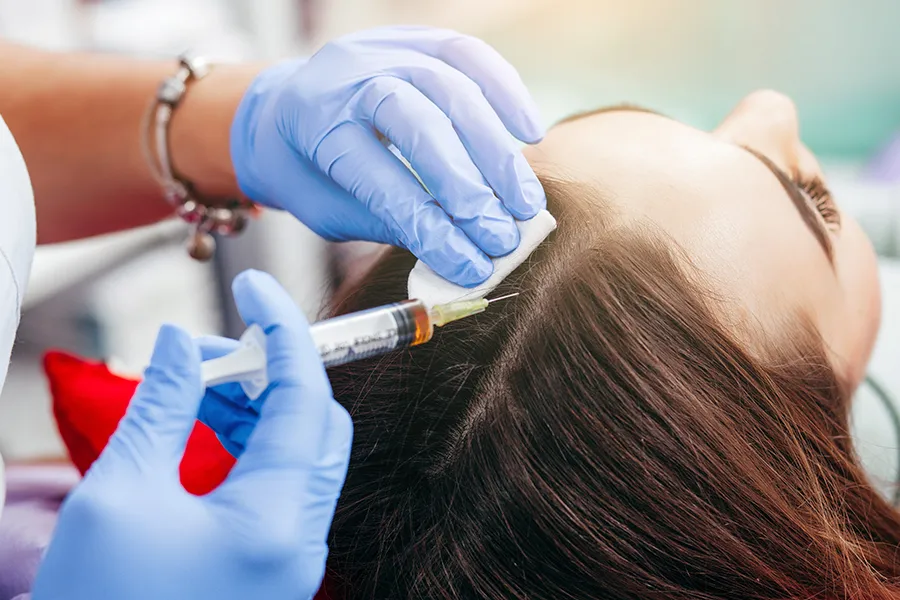
Platelet rich plasma is used in hair regrowth treatments to support scalp health and encourage hair growth in people experiencing thinning or hair loss. PRP hair treatments use concentrated platelets from a patient’s own blood and are delivered directly into the scalp in areas where hair follicles may be weakening. These platelets release growth factors that help support blood flow to the scalp and encourage normal follicle activity over time. PRP is most commonly used for androgen related hair loss in both men and women, particularly in earlier stages when follicles are still active. As a non-surgical option, PRP is often chosen by patients who want to work with the body’s natural processes rather than rely solely on medications or hair transplantation.
Connect with the Best Platelet-Rich Plasma Doctors in Your Area
Click on your area to find top-rated PRP doctors and clinics near you. Take the first step towards discovering the advanced healing power of PRP and regenerative medicine today!
Alabama
Alaska
Arizona
Arkansas
California
Colorado
Connecticut
Delaware
Florida
Georgia
Hawaii
Idaho
Illinois
Indiana
Iowa
Kansas
Kentucky
Louisiana
Maine
Maryland
Massachusetts
Michigan
Minnesota
Mississippi
Missouri
Montana
Nebraska
Nevada
New Hampshire
New Jersey
New Mexico
New York
North Carolina
North Dakota
Ohio
Oklahoma
Oregon
Pennsylvania
Rhode Island
South Carolina
South Dakota
Tennessee
Texas
Utah
Vermont
Virginia
Washington
West Virginia
Wisconsin
Wyoming

Popular Metro Areas
Atlanta, GA
Austin, TX
Baltimore, MD
Boston, MA
Charlotte, NC
Chicago, IL
Dallas, TX
Denver, CO
Detroit, MI
Houston, TX
Fort Lauderdale, FL
Indianapolis, IN
Kansas City, MO
Las Vegas, NV
Los Angeles, CA
Miami, FL
Milwaukee, WI
Minneapolis, MN
Nashville, TN
New York, NY
Orlando, FL
Palm Springs, CA
Philadelphia, PA
Phoenix, AZ
Pittsburgh, PA
Portland, OR
Raleigh, NC
Reno, NV
Sacramento, CA
San Antonio, TX
San Diego, CA
San Francisco, CA
San Jose, CA
Seattle, WA
Spokane, WA
St. Louis, MO
Tampa, FL
Washington, D.C.